
When we talk about learning to read, a lot of the focus is naturally on being able to read the words on the page.
Children learn phonics so that they can decode unfamiliar words. Then, as they become more experienced readers, those words begin to become more automatic and their reading becomes increasingly fluent.
But phonics and fluency only matter because they lead children towards meaning.
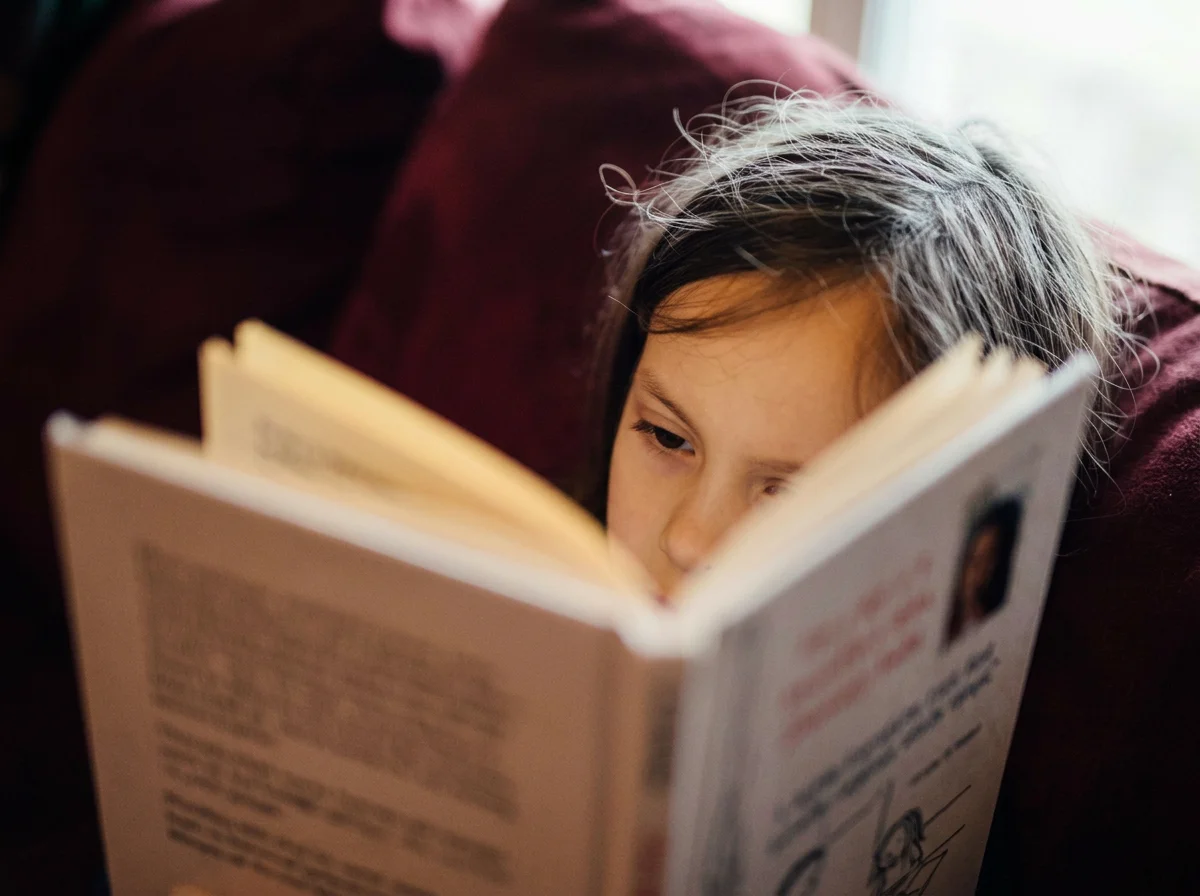
What is reading comprehension?
Reading comprehension is simply the ability to understand what we read — and understanding is the goal of reading itself.
There is a lot going on in order for us to understand what we read.
A child needs to identify the sounds represented by the letters on the page, blend these sounds into words, chunk those words into units of meaning using punctuation, follow what is happening across several sentences, remember important information, connect different ideas and sometimes work out things that the author hasn’t said directly.
Imagine a child reads:
“Sam pulled on his wellies and grabbed his umbrella before opening the front door.”
They might be able to read every word accurately.
But understanding the sentence involves more than decoding it.
They need to know what wellies and an umbrella are. They might also work out that it is probably raining, even though the sentence never actually tells us that.
Reading the words isn’t always the same as understanding them
It is quite possible for a child to sound like a good reader without fully understanding what they are reading.
Some children become very good at decoding. They can read the words accurately and may even read them quite fluently.
But if you stop and ask, “What just happened?” they may struggle to tell you.
This doesn’t necessarily mean anything is seriously wrong.
Sometimes a child has been concentrating so hard on reading the words that they haven’t had enough thinking space left to consider their meaning.
This is particularly common while reading is still quite effortful.
As decoding becomes more automatic and reading becomes more fluent, children have more processing ‘brain-space’ available to think about the story or information they are reading.
This is one of the reasons fluency is such an important bridge between phonics and comprehension. Reading fluently, ideally with expression, helps children notice the chunks of meaning within the text rather than concentrating on one word at a time.
That frees them to think about what the text actually means.
Comprehension begins long before children can read
One of the most important things to understand about comprehension is that children don’t have to be able to read independently to develop it.
In fact, much of the groundwork begins before formal reading instruction even starts.
When you read a story aloud to a child of any age and talk about what is happening, you are developing their comprehension.
When you ask:
“Why do you think he did that?”
“What do you think will happen next?”
“How is she feeling?”
you are helping your child learn to think about stories, characters, motives and events.
And because you are doing the reading, your child can concentrate entirely on understanding.
This means that the books you read aloud to your child can, and should, often be more challenging than the books they can currently read for themselves.
A Reception child who is reading a simple decodable book independently may still be able to listen to and discuss a wonderfully rich picture book or chapter story.
Both kinds of reading are important. They are simply doing different jobs.
Vocabulary matters
A huge part of reading comprehension is vocabulary.
If children don’t know what enough of the words mean, understanding a text becomes very difficult.
Imagine reading:
“The exhausted traveller reluctantly trudged towards the distant village.”
A child might successfully decode every one of those words.
But if they don’t know what exhausted, reluctantly, trudged or distant mean, the sentence won’t create much of a picture in their mind.
This is why talking with children and reading a wide variety of books aloud to them from an early age matters so much.
Books introduce children to words and ideas they might rarely encounter in everyday conversation.
You don’t need to turn story time into a vocabulary lesson.
Often, a quick explanation is enough.
“Trudged means he was walking slowly and heavily because he was tired.”
Then carry on with the story.
Over time, these little conversations build an enormous bank of language and knowledge that children can draw on when they read for themselves.
Children also need knowledge of the world
Sometimes a child struggles to understand a text not because their reading is poor, but because they don’t know enough about the subject.
If a book mentions a lighthouse, a child who has seen one, visited one or read about one before already has useful knowledge to connect to the text.
Another child may have no idea what a lighthouse is or why it might be needed.
The more children know about the world, the more they have to connect new information to. Making connections is a huge part of learning, so this aspect of comprehension cannot be ignored.
This is why being read to, talking, exploring, visiting places, watching good-quality programmes and simply answering children’s endless questions all contribute to becoming a strong reader.
So how can you help your child with comprehension?
You don’t need worksheets or formal comprehension questions to help your child understand what they read.
Conversation is usually far more valuable.
After reading together, you might talk about something that interested you:
“I wonder why she didn’t tell her mum?”
“That surprised me. Did you expect that to happen?”
“He seems really cross now. What do you think has upset him?”
You can also occasionally ask your child to tell you what has happened so far, particularly if you are returning to a book you started the day before.
But try not to question them after every page.
Reading together should still feel like sharing a book. We want to protect the enjoyment of reading, not turn every story into an assessment.
And don’t worry if your child doesn’t always know the answer.
You can think aloud yourself:
“I think he might be hiding because he’s frightened. It doesn’t actually say that, but that’s what I’m wondering.”
This shows children something very important – that good readers don’t simply retrieve answers from a page. They think, wonder, predict, make connections and sometimes change their minds.
What if my child finds comprehension difficult?
The first step is to work out why.
If your child is still struggling to decode many of the words, then comprehension may simply be suffering because reading itself is taking all their effort. That can be entirely normal at this stage of learning to read. Keep focusing on phonics and giving them plenty of opportunities to practise reading books that are well-matched to the letter-sound correspondences they have learned so far.
If they can read the words accurately but reading still sounds slow or laboured, the next step is often re-reading for fluency until their word reading becomes speedier, smoother and more natural.
As fluency develops, comprehension often becomes much easier because children have more attention available to think about meaning.
If a child is reading fluently but still finding it difficult to explain what they have read, then it is worth looking more closely at vocabulary, language understanding and their knowledge of the subject.
Sometimes the most useful question isn’t:
“Can my child answer comprehension questions?”
It is:
“Can my child tell me what they have just read?”
That simple conversation can reveal a great deal.
The purpose of reading
Ultimately, we teach children phonics so that they can read words.
We help them develop fluency so that those words begin to flow.
But understanding is where all of those steps are leading.
We read to discover things, to follow stories, to laugh, to imagine, to learn and to make sense of other people’s ideas and experiences.
Phonics gets children onto the first stepping stone. Fluency helps them move forward with confidence. Comprehension takes them to where we want reading to lead: a whole world of stories, knowledge, imagination and enjoyment.
